
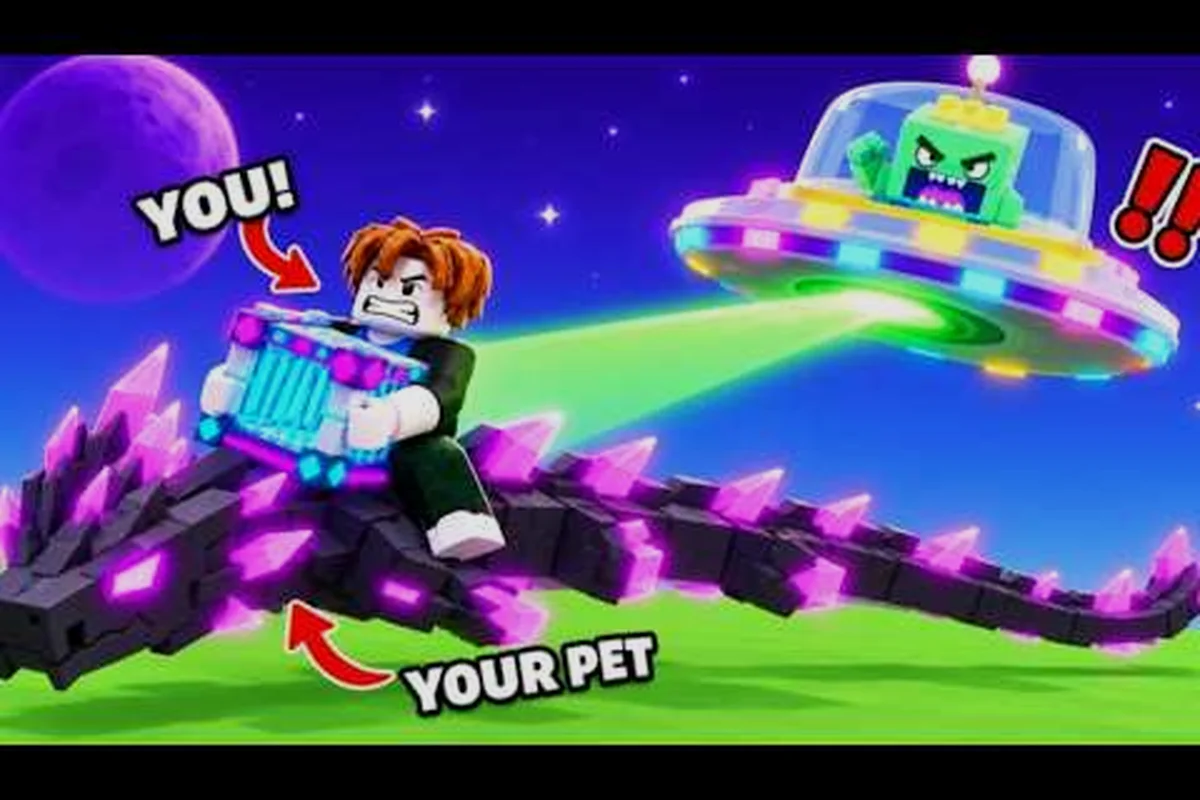
Steal A Pet And Ride It rebirth mistakes can erase hours of barn income and treadmill progress. After World 2, timing and reset checks matter because pets, cash flow, and training now interact more closely: a premature rebirth can consume the cash needed for a high-value pet, interrupt a long treadmill session, and leave the account without enough resources to rebuild the same production loop. Comparing the intended pet-and-cash sequence with the time available on the treadmill makes the trade-off concrete before confirming the rebirth, while checking whether the next run preserves both barn earnings and training gains prevents a profitable-looking reset from becoming a net loss.
Rebirth mistakes tied to World 2 progress
Rebirth is most valuable when it accelerates a later part of the progression loop. In Steal A Pet And Ride It, the useful cycle combines stealing pets, placing suitable pets in barns, training on a treadmill, and returning to a harder biome with enough speed to escape. After World 2, a careless reset can leave that cycle weaker than before.
The core mistake is treating rebirth as a simple cash exchange. Cash is only one part of the equation. The decision also affects equipped pets, barn assignments, Speed training, badges, gamepass benefits, and the route you can comfortably complete. A player can gain a large cash bonus yet still run slower if the wrong pets or training resources disappear.
| System | What it contributes | What a bad reset can cost | What to verify first |
|---|---|---|---|
| Barn | Passive cash income | Several pets or a strong income placement | Barn placement and cash per second |
| Treadmill | Direct Speed training | Trained speed or upgrade progress | Current Speed and training tier |
| Pet roster | Riding speed and escapes | Valuable mounts needed for progression | Which pets remain equipped |
| World access | Higher-value biome targets | Access to World 2 or the Black Hole | Unlocks still active after reset |
| Cash | Rebirth payment and spending | Resources needed for immediate recovery | Total cash after fees |
A second common mistake is rebirthing simply because the button becomes available. The better question is whether the next cycle will produce more passive income, stronger Speed, or access to a faster route. If the answer is unclear, continuing the current run for another income cycle may create a better reset.
Check the active progression loop
Before resetting, write down three numbers: current cash, Speed, and barn income. A useful comparison is not simply “more cash after rebirth,” but how many seconds each option needs to recover the cash spent. If a reset saves several minutes of route progress, the immediate gain may justify it even when barn assignments are rearranged.
After World 2, make sure the reset does not interfere with access to the environments needed for that calculation. Players unsure how the second area works can review the World 2 and Black Hole access guide before confirming an unlock. The important distinction is between a biome that is unlocked in the current run and one that becomes available again after rebirth.
Rebirth and pets handled correctly
Pets affect the run in two distinct ways: their riding multiplier improves movement, while their barn placement can generate cash. Those values should not be evaluated with the same priority. A pet with strong riding performance may be best for escaping, while another may contribute better passive income.
The most damaging mistake is making the decision without separating those roles. Moving your best income pet into the active riding slot can reduce barn output. Sending a fast escape pet into a barn can make the next run harder. Before resetting, list which pet occupies each important role and record the replacement available after the reset.
| Pet decision | Benefit | Risk | Safe action |
|---|---|---|---|
| Keep the fastest rider equipped | Better escape speed and route efficiency | Lower barn income if it is also a strong producer | Keep the rider equipped and place another pet in the barn |
| Move a high-income pet into a barn | More passive cash while progressing | Weaker riding speed | Test the alternative rider before committing |
| Reset with a reduced roster | Simpler loadout | Loss of rare or useful pets | Compare the practical benefit with the full replacement cost |
| Chase a new pet immediately | Possible long-term upgrade | Unnecessary spending after a large cash reset | Preserve recovery cash until the new pet is worth the cost |
Community reports consistently treat pet value as more than a single rarity label. The published information does not provide a complete probability table for every pet, so estimates about individual drop rates should be treated cautiously. Players should base decisions on observed Speed, cash per second, and usefulness in the current biome rather than on an unverified tier ranking.
Keep riding and income slots separate
A practical solution is to maintain two short groups before pressing the rebirth control: one for escape runs and one for barn production. The escape group should contain the pet that comfortably handles the route, while the barn group should prioritize steady cash generation. The best World 2 pets may be valuable for different reasons, and the World 2 pet overview can help organize the roster.
Do not assume every rare pet must remain equipped. A strong rider can earn its place during a difficult run, but the standard farm cycle may still favor a more efficient setup. Conversely, leaving a useful pet idle provides no advantage. Rebirth decisions should be based on active assignments, not merely the number of pets in your inventory.
Rebirth and barn income reviewed
Barn income is the passive half of the progression loop. Because housed pets generate cash over time, a reset can remove productive pets until they are returned to the barn or reacquired. The mistake is treating the barn as decoration that can be reconstructed instantly after rebirth.
Community progression advice often prioritizes cash per second when comparing pets. That metric gives a clearer picture than rarity because it measures the actual output of a placement. Still, verify the current game behavior because rates, pets, and available barn spaces may change across updates or platforms.
| Barn checkpoint | Question to answer | Sign that the reset is safe | Sign to delay it |
|---|---|---|---|
| Occupancy | Which pets are producing cash now? | Every valuable producer has a planned destination | Strong producers will remain idle |
| Cash per second | Which placement earns the most? | The best current producers remain assigned | The new run starts with a major income loss |
| Upgrade state | Are barn levels, skins, or capacity retained? | The productive tier remains active | A costly upgrade disappears without compensation |
| Recovery window | How long until lost income returns? | The reset period is short relative to the reward | Many minutes of income are needed to repay the cost |
| Collection method | Are pickups automatic? | Auto Collect or manual collection remains efficient | Income piles up because it is not being collected |
Barn skins such as Treehouse, Sakura, Open Pens, and Halloween themes are primarily presentation choices, while the listed Auto Collect gamepass handles barn pickups automatically. Cosmetics should not be confused with income multipliers. Likewise, a premium option cannot replace a sound reset plan if its cost leaves the player without recovery cash.
Calculate recovery instead of chasing the largest number
Use a simple comparison. Divide the cash gained by rebirth by the difference between current cash per second and the expected cash per second after resetting. If the new income is lower, include the lost barn time in the calculation. A reset that awards more cash but reduces income may recover that cash slowly, which can make the supposed upgrade a downgrade.
Wait for a stronger opportunity when the barn setup is temporarily weak. Completing another income cycle may provide enough cash to repay the rebirth and still improve the next run. This becomes especially relevant after World 2, when players may be balancing two barns and a faster treadmill rather than pursuing only the first available reset.
Rebirth and treadmill gains optimized
The treadmill trains Speed directly, and upgrading it raises the training ceiling. Riding a pet adds another speed multiplier on top, so a fast pet and a strong treadmill reinforce each other. The mistake is assuming that one visible Speed number tells the whole story.
Separate active riding Speed from training capacity. If a rebirth removes or weakens the treadmill setup, the next run may need substantial time to recover its previous pace. The official progression signals offer a useful long-term reference: the Speed Demon badge requires one million Speed, while escape streak badges appear at 50, 150, and 300.
| Speed factor | Why it matters | Before rebirth | After reset |
|---|---|---|---|
| Treadmill tier | Determines the Speed training ceiling | Record current tier | Confirm whether it remains unlocked |
| Trained Speed | Affects escape performance | Record the displayed number | Estimate the time required to recover |
| Riding pet | Adds a multiplier on top of base Speed | Record the equipped pet | Identify the replacement rider |
| Current biome | Changes the movement requirement | Note the target area | Confirm the same area remains accessible |
| Long-term target | Supports milestone planning | Compare progress with 1M Speed | Keep the target on the next training plan |
A player can lose time by upgrading the treadmill when the current setup already supports the next biome. The better upgrade depends on the run. If reaching the Black Hole requires more escape speed than the present treadmill provides, a capacity upgrade may be the priority. If the rider feels slow but training is near its cap, improving the active pet is more useful.
Avoid confusing training speed with route speed
A stronger treadmill does not automatically mean an immediate escape if the equipped pet does not provide enough multiplier. Conversely, a fast pet may carry you through a difficult stretch while the treadmill remains unchanged. Measure the route, not only the menu value. The Black Hole route guide is useful for identifying which sections demand extra speed.
After a reset, enter the next progression area and test the rider before spending heavily. If movement feels noticeably weaker, restore the previous riding arrangement first. Then compare actual escape consistency with the training plan. This avoids spending cash on another treadmill upgrade before identifying the real source of the slowdown.
When to rebirth after World 2 without losing momentum
The strongest reset window combines three conditions: a meaningful cash award, a preserved or clearly replaceable barn setup, and enough Speed to complete the next route. Missing one condition does not always require postponing indefinitely, but it should reduce the amount of cash you spend immediately afterward.
Consider the current objective. If the next goal is a difficult escape, prioritize the rider and treadmill setup. If the goal is rebuilding cash, preserve barn output and delay unnecessary cosmetics. If the goal is another rebirth, calculate whether this reset would meaningfully accelerate the next one rather than merely creating a brief cash spike.
| Current objective | Main requirement | Recommended reset condition | Avoid |
|---|---|---|---|
| Reach the Black Hole | Reliable escape speed | Confirm route access and rider performance | Rebirthing without restoring Speed |
| Rebuild cash | Strong passive income | Keep productive pets assigned to the barn | Wasting the bonus on cosmetic purchases |
| Unlock the next tier | Higher training capacity | Check treadmill ceiling and target milestones | Upgrading while the current tier still helps |
| Chase a specific pet | Enough cash for the chase | Rebirth only after the pet becomes farmable | Rebirthing while barn income is disabled |
| Make a second rebirth | Faster cash generation | Compare the new cash-per-second rate | Treating the first reward as the final goal |
Community estimates should be used as estimates, especially because complete pet odds and every exact upgrade requirement are not published. Reliable decisions come from your recorded values: current cash, barn cash per second, Speed, treadmill tier, equipped pet, and remaining route time.
Use a two-check reset method
Perform one check immediately before pressing the control and another immediately afterward. Before the reset, record the barn lineup, rider, treadmill tier, Speed, cash, biome access, and badges. Afterward, confirm that the intended barns are available, the route can be tested, and the cash balance has enough room for immediate recovery.
This method prevents a common error: relying on memory while several systems change at once. It also helps distinguish a temporary loading delay from a genuine loss of progression. If a pet or upgrade is missing, check the current interface before buying a replacement, and compare the situation with the mechanics described in the pet retention and rebirth guide.
Rebirth in black hole planning
The Black Hole represents the final biome in the published badge list, so reaching it is a clear progression milestone. A reset performed immediately before a difficult run can make the climb harder than expected. Steal A Pet And Ride It rebirth in black hole planning should therefore include both route access and escape capacity, not just cash.
Begin by confirming that World 2 remains accessible after the reset. Then test your fastest available rider in a lower-risk area. If the pet feels sluggish or the route no longer works as expected, resolve that first. Speed Demon remains a separate one-million-Speed milestone; reaching the Black Hole does not mean that every long-term training target has been completed.
| Black Hole preparation | Why it matters | Final verification |
|---|---|---|
| World 2 access | Keeps the intended destination reachable | Open the required portal or hub route |
| Rider multiplier | Supports sustained escape movement | Test the equipped pet before the final attempt |
| Treadmill ceiling | Restores training efficiency | Confirm the current tier and upgrade state |
| Recovery cash | Funds corrections without another reset | Keep enough cash for pet or training needs |
| Badge status | Tracks completed milestones | Review the 300, 150, and 50 streak targets |
Do not make a Black Hole attempt with a lineup that failed the same section before rebirth. If the previous attempt ended because the rider was too slow, the answer is not another cash reset. Restore Speed, choose a practical barn lineup, and test the route again.
Frequently Asked Questions
Should I rebirth immediately after reaching World 2?
Not automatically. Before rebirth, record your barn lineup, active rider, treadmill tier, Speed, and cash, then rebuild the lost resources before chasing another reset. For example, if the next World 2 cycle needs a stronger rider but your current treadmill still supports the required Speed, rebirth only after securing a workable pet and enough cash; otherwise, use the current barn to improve the setup first.
Do pets remain after rebirth in Steal A Pet And Ride It?
Pet retention can vary with the current game mechanics and progression state, so verify it in-game instead of assuming every equipped, housed, or stored pet returns automatically after rebirth. Take a pre-reset snapshot of your barn lineup, active rider, treadmill tier, Speed, cash, and badge progress; afterward, compare each slot and prioritize restoring any missing rider or barn pet needed for World 2 access, because an apparently successful rebirth can still leave your setup incomplete.
Is a better treadmill always the best post-rebirth upgrade?
No. Upgrade the treadmill only when its training ceiling blocks your next World 2 target. If the current tier still meets the required Speed, but your equipped rider cannot handle the route, prioritize restoring that rider and rebuilding cash from your barn instead of spending on a treadmill upgrade.
Should I use barn income to repay a rebirth immediately?
Keep a cash reserve large enough to rebuild progression and absorb unexpected costs after rebirth. For example, if the barn needs several pets restored before it can generate dependable income, calculate that rebuilding cost first rather than spending immediately on a treadmill tier. Only use the remaining cash on upgrades after confirming that barn income is flowing and World 2 access remains secure.
What is the safest way to prepare for the Black Hole?
Confirm World 2 access, test your fastest rider, verify the treadmill tier, and review badge progress before making the final approach. The Black Hole badge marks the final biome, while the separate one-million-Speed target represents longer-term training progress.